
Mapping Romani futures: Connected local histories and global realities
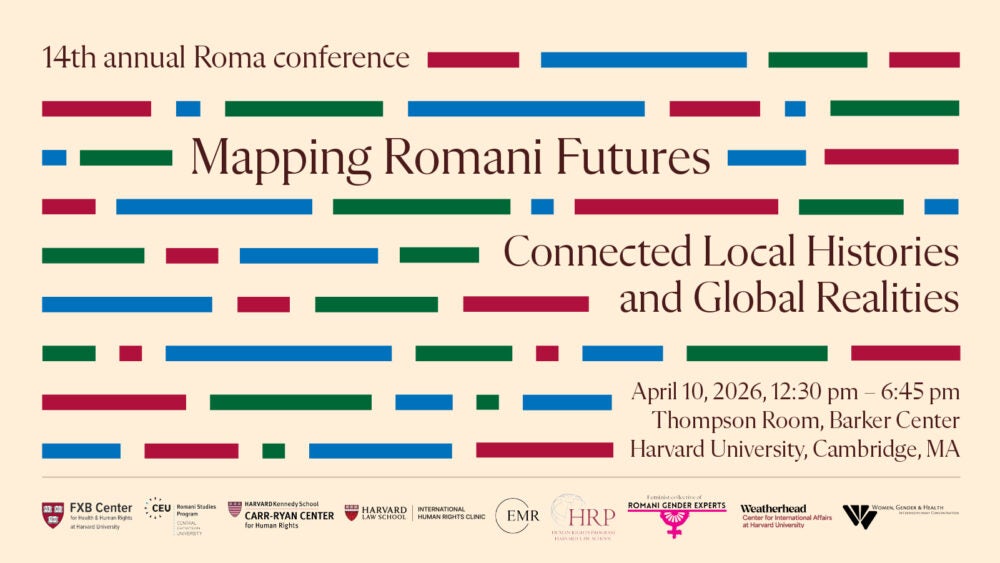
Date and Time: Friday, April 10, 2026 at 12:30pm – 6:45pm EDT. Reception to follow at 7:00pm EDT.
Location: 110 Thompson Room, Barker Center, 12 Quincy St, Cambridge MA 02138 (Harvard University) and online on Zoom
Background information about International Roma Day (April 8):
International Roma Day has been celebrated by Romani communities around the world for decades. This year marks the 55th anniversary of the First World Roma Congress, a historic gathering at which Roma Day, the Romani flag, and the anthem “Gelem, Gelem” were adopted as key symbols of the global Roma diaspora.
Across regions, neighborhoods, organizations, and institutions use this anniversary to highlight Romani heritage through concerts, exhibitions, film screenings, conferences, and media events. Many leaders and scholars also observe Roma Day with commemorations that honor victims of anti-Roma racism and reflect on progress in social, political, cultural, and economic life.
Conference overview:
Since 2013, the annual Harvard Roma Conference has provided a forum to examine and address anti-Roma racism—its origins, history, drivers, protectors, and global manifestations, with particular attention to children and youth. The conference has worked to strengthen data collection on Roma (especially youth and children), improve research methods, promote participatory action research with Romani youth, and critically revisit histories, policies, and practices affecting Romani communities. A central goal has been to amplify and center Romani voices and experiences in global scholarship.
On April 10, 2026, the 14th Harvard Roma Conference, Mapping Romani Futures: Connected Local Histories and Global Realities, will once again mark Roma Day. This year’s event examines Romani histories and present-day realities to help shape more equitable futures for Romani children, youth, and generations to come, situating these discussions within a global context of rising human rights abuses, wars, extremism, and climate and digital threats.
This year’s program includes:
Keynote panel on global and regional trends and threats affecting Romani children and youth, especially in the context of escalating human rights abuses, wars, extremism, and climate and digital risks.
Panel 1 – Connected Futures, Histories, and Realities: Exploring connections and continuities in Romani histories and lived realities, and how these shape the lives, inequities, and identities of Romani children, youth, and future generations.
Panel 2 – Intersectionality and Intersecting Stories: Examining often overlooked and marginal axes of inequity in narratives of Romani histories, realities, and futures.
Book talk: Continuing a recent tradition, the conference will close with a book talk highlighting recent monographs on Romani people, with emphasis on works that advance global scholarship.
Agenda
12:30pm: Welcoming Remarks
Jacqueline Bhabha, JD, MSc
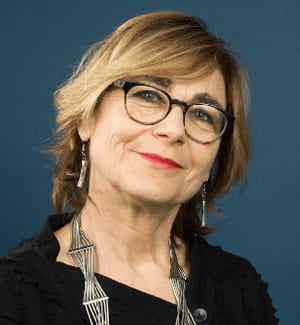
Jorge E. Chavarro, MD, DSc

12:40pm: Greeting from the Master of Ceremonies and Performance
Rayna Emilova
Rayna has several years of experience in education and continues to engage with teaching and research as interconnected forms of advocacy. Her work is rooted in the lived realities of Roma communities in Europe and shaped by a deep commitment to challenging anti-Roma racism, structural exclusion, and the normalization of inequality across institutions.

12:55pm: Keynote speech – Growing up in an age of crises: Global trends shaping the future of children, youth, and next generations
Jacqueline Bhabha, JD, MSc
Maleiha Malik
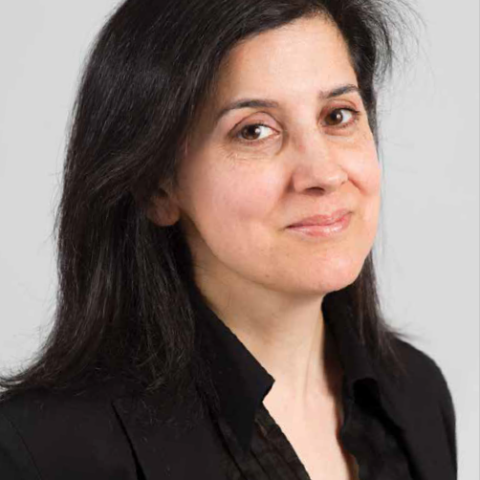
Justyna Matkowska

Nidhi Trehan

2:10pm: Panel 1 – Connected futures, histories, and realities
Jehane Sedky
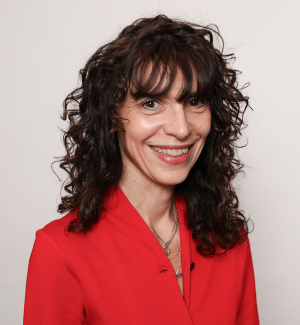
Justyna Matkowska
Edita Rigova

Judit Ignacz

Fernando Ruiz Molina

3:55pm – 4:10 pm: Break
4:10 pm: Panel 2 – Fire-side chat: Intersectionality and intersecting stories
Maria Bucur

Alba Hernández Sánchez

Vivien Brassói

Maria Atanasova

Aldessa Georgiana Lincan

6:10pm: Book talk
Maria Dumitru

Aldessa Georgiana Lincan
Chelsi West Ohueri

Margareta Matache
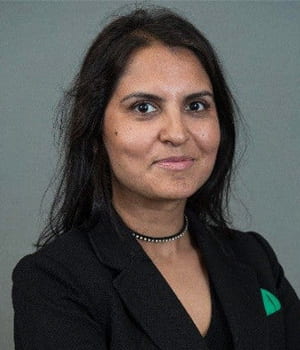
Maria Bucur
7:00pm: Reception
Please direct any questions about this event to Claire Street at cstreet@hsph.harvard.edu.
Speakers’ remarks are based on their own scholarship and experience. As such, they speak for themselves, not for Harvard University.